GRRRL GERMS
Punk feminism goes viral, 1991–2026
Great Park Gallery, Irvine, California
August 29 – November 29, 2026
Gallery hours: Thursdays & Fridays: Noon – 4pm; Saturdays & Sundays: 10am – 4pm. Check gallery website for updates.
Supported by LOEWE.
.jpg)
Riot Grrrl was forged by teenage girls and young women in the United States as an act of creative resistance to an earlier era of virulent sexism in the punk music scene and in the culture at large. Adapting strategies from earlier queer and punk feminisms and 1970s radical politics, riot grrrls started bands regardless of musical training, wrote and self-published their own magazines via 3-cent photocopies, and formed support groups with other girls beginning in the early 1990s. Soon they established wider networks through letter-writing and in-person meetings, coordinated volunteer-run conferences to celebrate female artistry and share information, and arranged benefits for political causes. Riot Grrrl rapidly spread across the U.S. and eventually to over 30 countries on six continents.
Each Riot Grrrl scene was a response to their specific location, era, and political climate. In 2000, some of the trailblazing grrrls organized Ladyfest in Olympia, Washington, as a platform for music, performance, visual art, film, and workshops by female and transgender artists. A year later, Rock ‘n’ Roll Camp for Girls was founded in Portland, Oregon, to teach younger girls and genderqueer youth how to play musical instruments and write songs. Locally-organized Ladyfests and Girls Rock Camps can be found internationally today.
In Turkey, Chaos, I’m Your Mistress was an online punk and metal community for women and non-binary individuals that held Ladyfest shows in Istanbul and launched a feminist music label. In a village in Nepal, The Infoshop housed a radical library and a record label, and provided self-defense training for local Dalit girls. In the Philippines, Rural Women Advocates organizes journaling workshops for female agricultural workers and collectively stitches banners advocating for land rights and against militarization. These are a few examples of how riot grrrls have continued to collaboratively cultivate safe spaces and grassroots creative production.
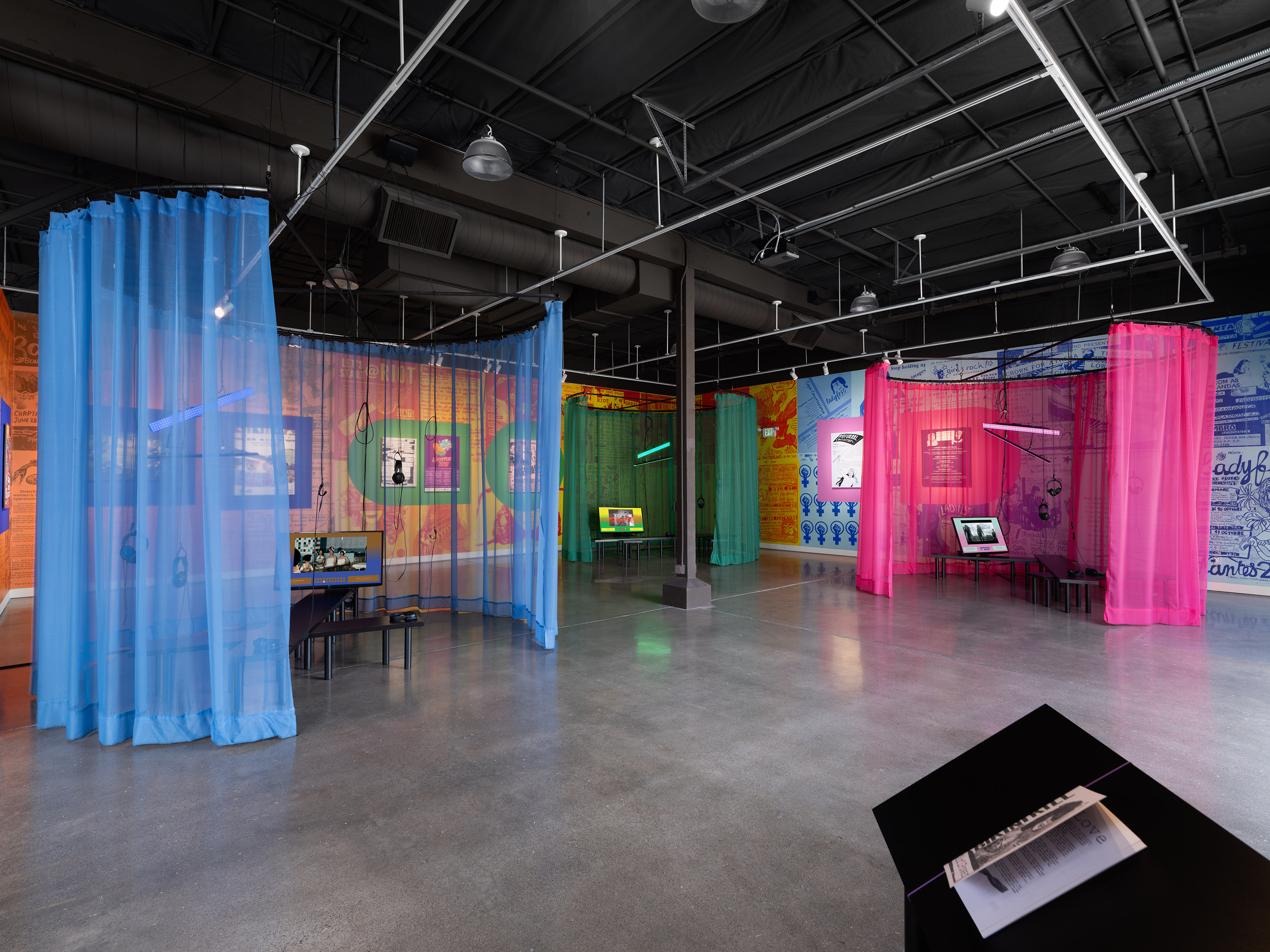
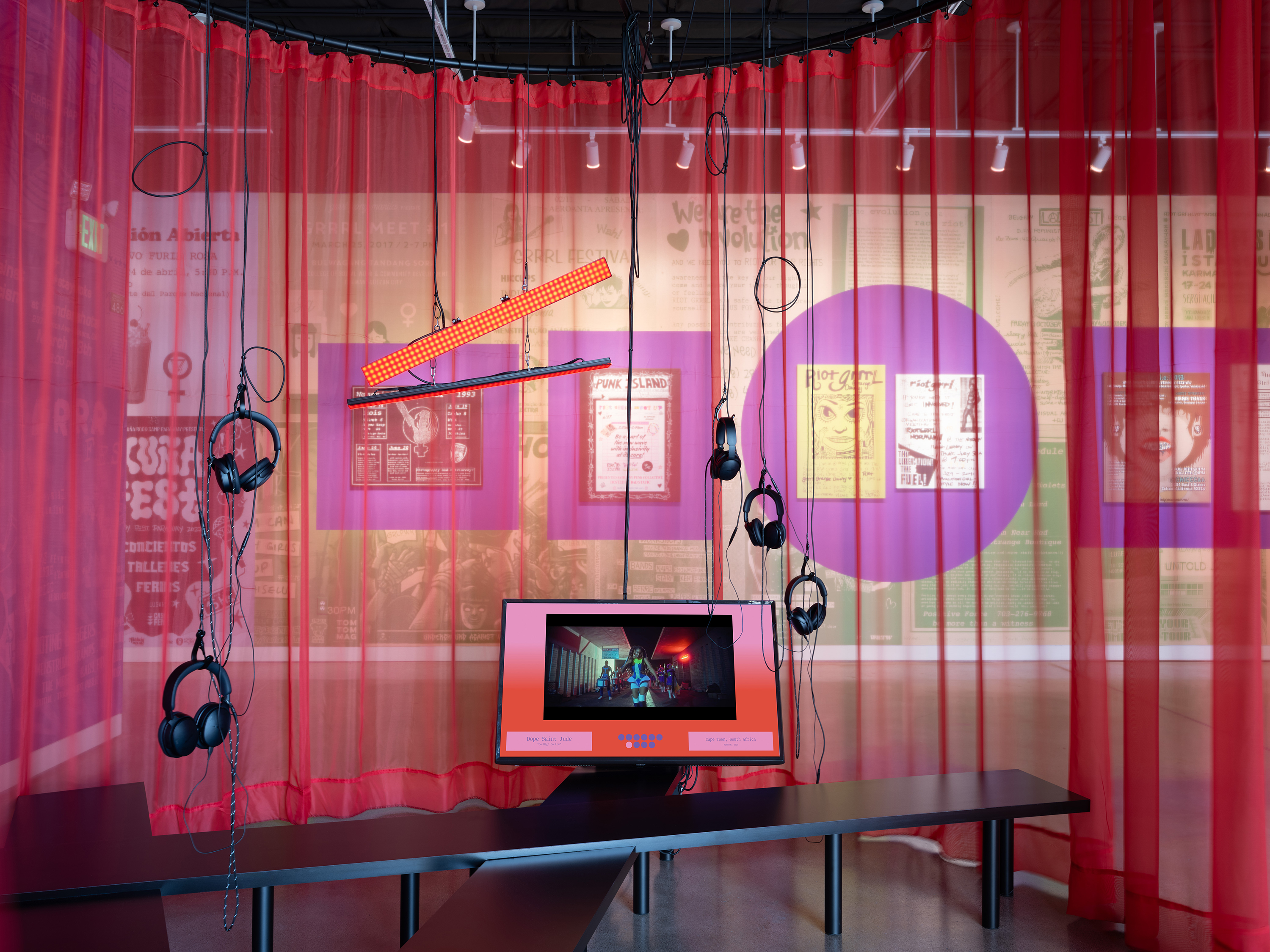
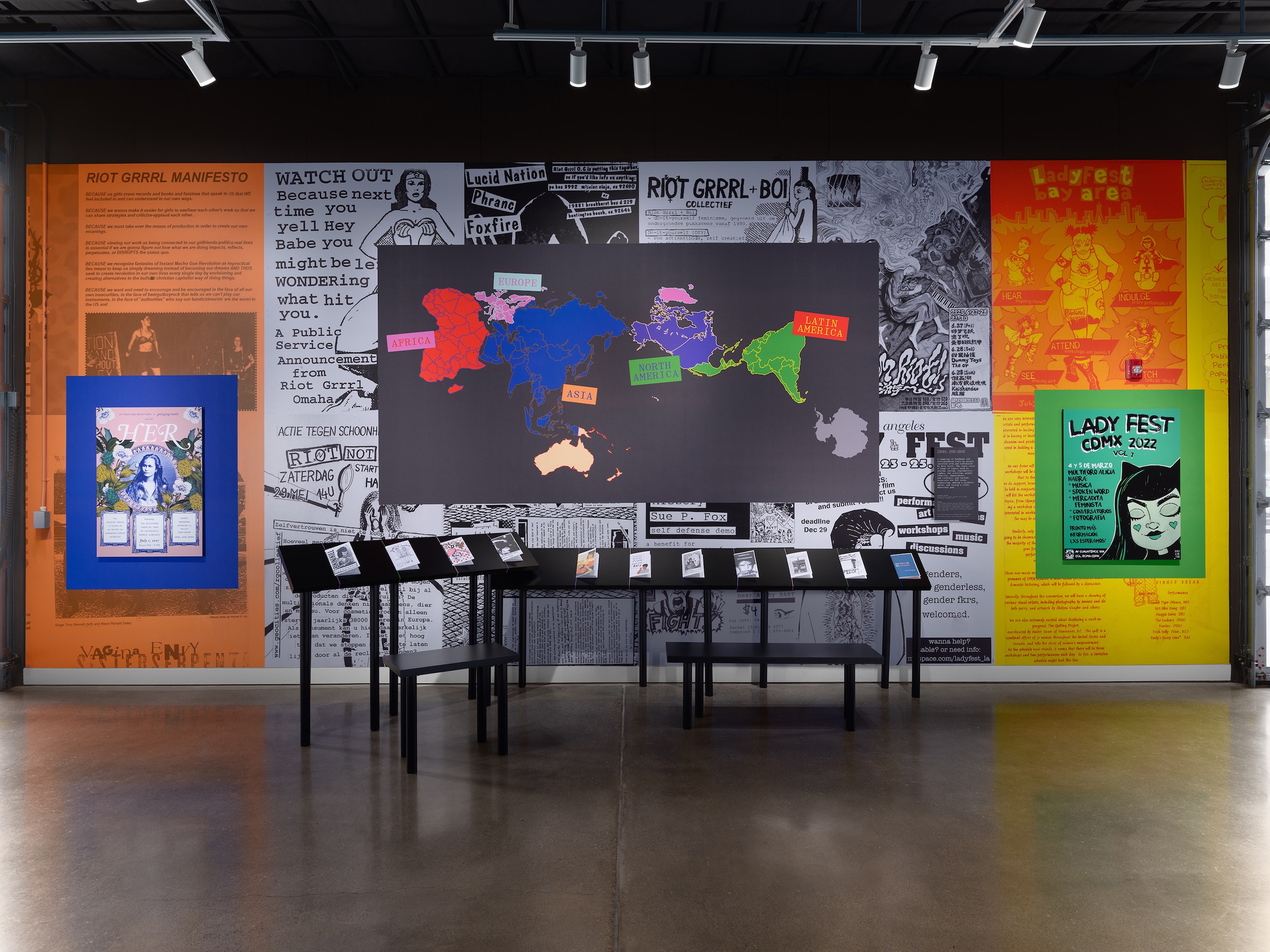
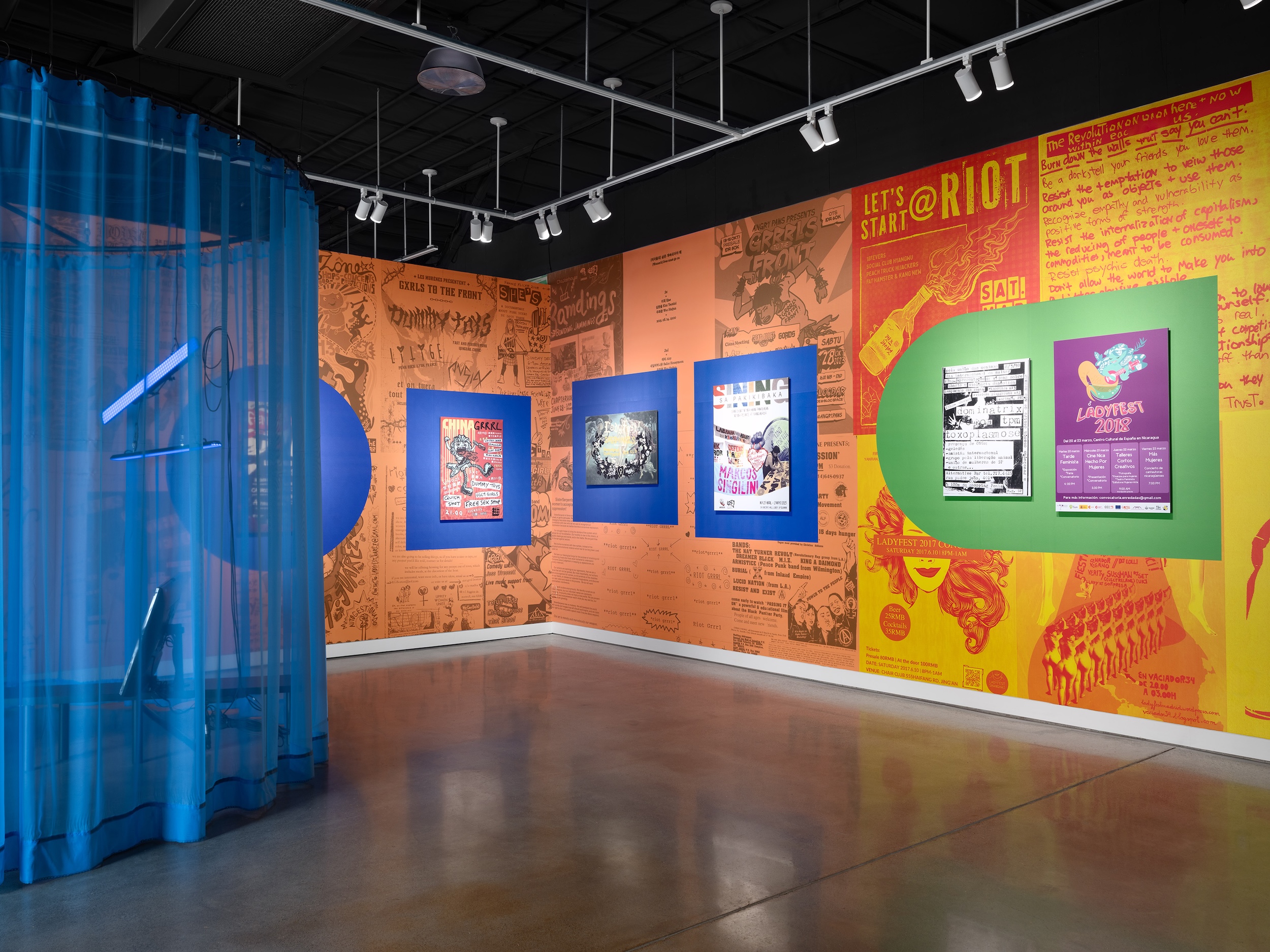
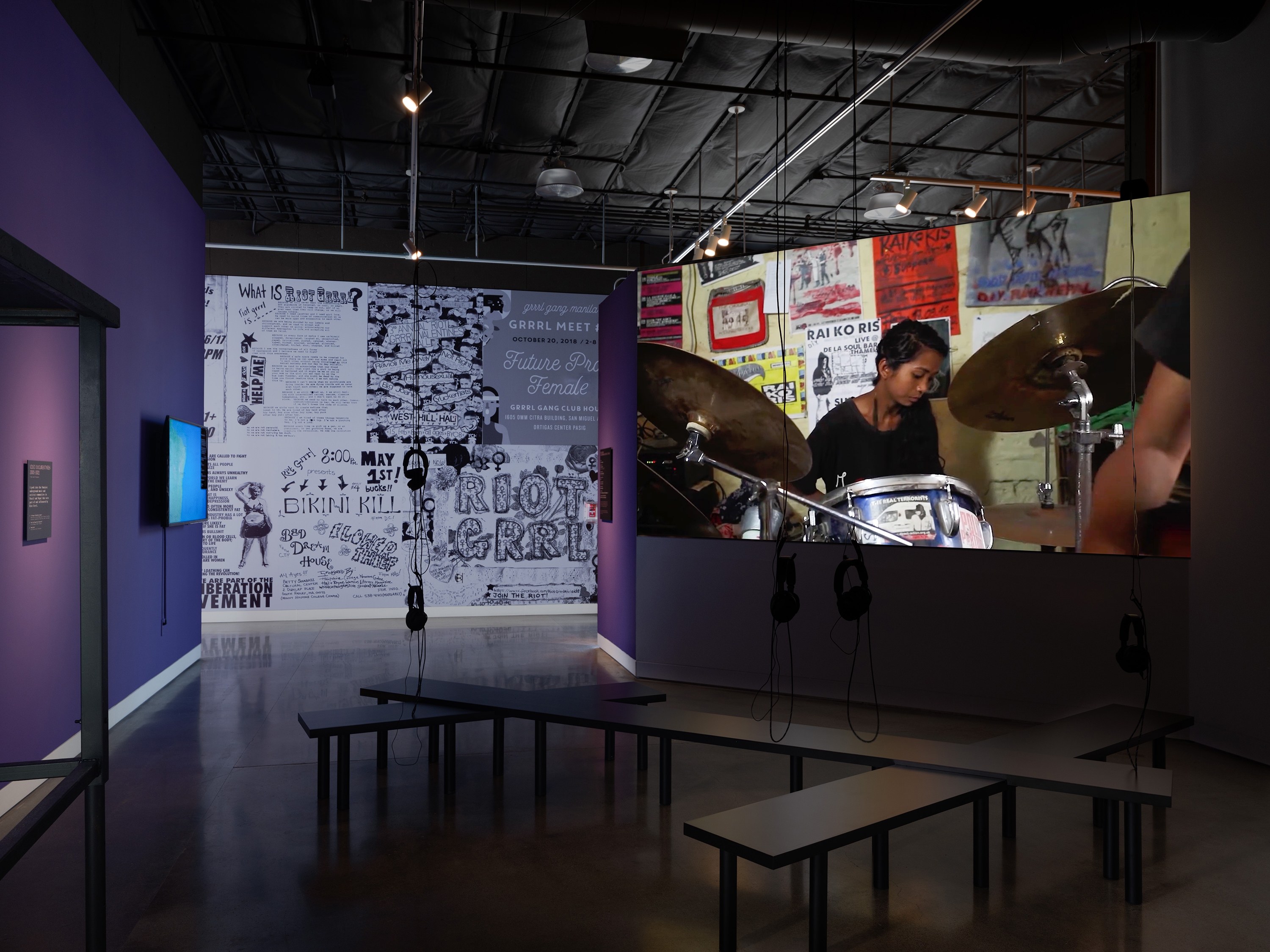
Grrrl Germs is an exhibition showcasing the creativity and passion behind the punk feminist movement Riot Grrrl, and how it radiated globally across 35 years. It features five listening areas with a sampling of music from around the world created or influenced by Riot Grrrl bands; fliers that provide a glimpse into the variety of community-building and activist events; a selection of handmade and self-produced zines; and a collaborative map tracking Riot Grrrl chapters, Ladyfest gatherings, and related endeavors. This is a living history, not a sealed past.
The original movement’s rousing call for girls’ and women’s rights, and its encouragement of DIY artistic expression still resonate, inspiring new generations. The exhibition’s title, Grrrl Germs, is adapted from the song and fanzine “Girl Germs” by the pivotal band Bratmobile (now based in Los Angeles). The title reflects the infectious nature of Riot Grrrl, emboldening us to rebel against oppression and evolve into better citizens for our communities.
Grrrl Germs: Punk feminism goes viral, 1991–2026 is curated by Astria Suparak and presented by Daisy Chain Fields, with special thanks to C3 Presents and the City of Irvine.
Supported by LOEWE.
Event technology, engineering, and technical production services provided courtesy of Creative Technology.
Headphones provided courtesy of Bose.

%20(1).png)